If you ever baked a cake that turned flat or made a pizza that stayed soft, the problem was simple, you didn’t preheat. Many people still struggle with how to preheat convection oven the right way. The good news? You can fix this with a few easy steps. Preheating makes your food cook evenly and gives perfect results every time. This guide will show you exactly how to do it.
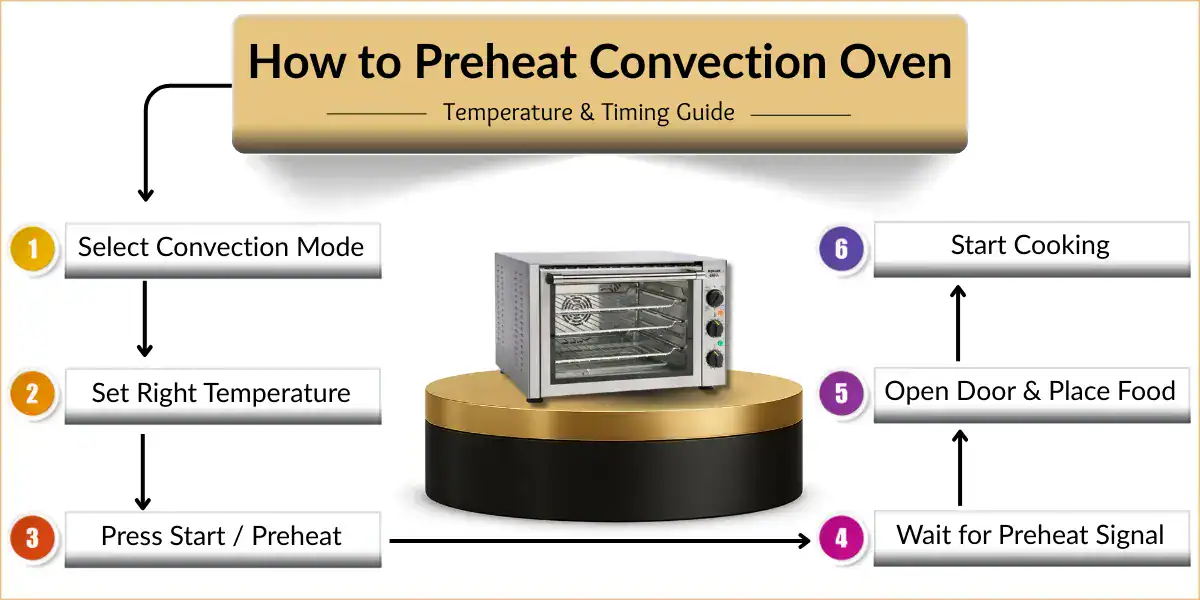
How to Preheat Convection Oven (Step-by-Step Guide)
Preheating warms your oven to the right temperature before cooking. This helps your food start cooking correctly and gives better texture and taste.
- Select the Convection Mode
- Set the Right Temperature
- Press Start / Preheat
- Wait for the Preheat Signal
- Open Door Quickly and Place Food
- Start Cooking Immediately
Follow these steps carefully to learn exactly how to preheat a convection oven.
Step 1 – Select the Convection Mode
Choosing the right mode is the first step to preheating your oven correctly. The convection mode helps hot air circulate evenly for faster and uniform cooking.
- Look for the Convection button or fan icon on your oven.
- Press the button to activate the fan.
- Ensure the display shows that convection mode is on.
- For convection microwaves, press the Convection mode specifically.
- Always check the indicator light or symbol before setting the temperature.
Step 2 – Set the Right Temperature
Setting the right temperature is important for good results. Always use °C in India.
- Check the recipe for the temperature.
- Set it using the knob or digital panel.
- Common temperatures:
- Cake: 160–180°C
- Pizza: 200–220°C
- Cookies: 160–170°C
- Once set, check the display and avoid changing the temperature during preheating.
Step 3 – Press Start / Preheat
After selecting the mode and setting the temperature, it’s time to start preheating. Pressing start activates the oven and begins heating. Follow these points to do it correctly:
- Press the Start or Preheat button on your oven.
- Look for the preheat indicator on the display (sometimes a “P” or light).
- Listen for the fan or beep that shows the oven has started.
Step 4 – Wait for the Preheat Signal
After starting the oven, you need to wait until it reaches the correct temperature. This ensures your food cooks evenly from the start.
- Watch the digital display or indicator light for preheat status.
- Listen for the beep that signals preheating is complete.
- Some ovens show a “Preheat Complete” message on the screen.
- Typical waiting time is 5–10 minutes, depending on oven size and temperature.
- Avoid opening the oven door while waiting, as it loses heat.
Step 5 – Open Door Quickly and Place Food
Once preheating is complete, it’s time to place your food inside. Open the oven door carefully and quickly to keep the heat inside. Follow these points:
- Open the oven door gently and briefly.
- Place your dish on the correct rack level.
- Avoid keeping the door open too long to prevent heat loss.
- Make sure your tray or pan is ready before opening the oven.
- Close the door immediately after placing the food.
Step 6 – Start Cooking Immediately
After placing your food, start cooking right away. This ensures the oven heat is at the correct level for even cooking. Follow these points:
- Set the cooking time according to your recipe.
- Keep the oven door closed while cooking.
- Check occasionally through the oven window, not by opening the door.
- Use the middle or recommended rack for best results.
- Follow the recipe temperature for perfect texture and browning.
How Long Does a Convection Oven Take to Preheat?
A convection oven heats faster because the fan spreads hot air quickly. The exact time depends on your oven’s size, temperature setting, and heating power.
Oven Size | Preheat Time | 160°C | 180°C | 200°C | 220°C |
Small (20–25L) | 5–7 min | 5–7 min | 7–9 min | 8–10 min | 10–12 min |
Medium (28–32L) | 7–10 min | 5–7 min | 7–9 min | 8–10 min | 10–12 min |
Large (40L+) | 10–12 min | 7–9 min | 8–10 min | 10–12 min | 12+ min |
Factors That Affect Preheat Time
- Oven size
- Heating element power
- Room temperature
- Opening the oven door during heating
In my experience, old ovens heat slower because their heating element loses strength over time.
Quick Preheat Cheat Sheet (30-Second Guide)
Use this quick chart when you want a fast answer without checking the full details.
Common Dish Preheat Temperatures:
- Cake: 170°C
- Pizza: 210°C
- Cookies: 165°C
- Paneer Tikka: 200°C
- Garlic Bread: 190°C
What Does Preheating Mean?
Preheating means heating your convection oven to the set temperature before cooking. The oven cannot reach full heat instantly, so it needs a few minutes to get ready. In simple words, it works like a tawa that must get hot before you place the roti on it.
How Preheating Works in a Convection Oven
A convection oven has a fan and a heater. Both turn on together when you press “Preheat”.
- The heater creates hot air.
- The fan pushes this hot air in all directions.
- The oven reaches the set temperature quickly.
- The heat spreads evenly inside the chamber.
Because of this airflow, a convection oven heats faster than a normal oven.
Different types of convection oven use the same airflow method, but the speed and evenness can change based on the design.
Why This Step Matters
Preheating gives your oven stable heat from the beginning. Your food cooks at the right temperature from the first minute, so the results stay consistent.
Why Should You Preheat a Convection Oven?
Preheating improves the overall quality of your cooking. The oven becomes hot, steady, and ready for the recipe.
Even Heat from the Start
A preheated oven maintains a steady temperature. Cookies bake evenly, and the bottom does not stay raw while the top gets dark. Your dish cooks in a balanced way.
Faster and More Reliable Cooking
When the oven is already hot, food starts cooking immediately. You save time, and your recipe follows the timing given in cookbooks or online instructions.
Better Texture and Taste
Correct heat at the beginning improves texture and flavour. Pizza becomes crisp, cakes rise better, and roasted dishes get a deeper taste.
No Soggy or Undercooked Spots
A cold oven often leaves the centre undercooked. Preheating fixes this problem by ensuring the whole dish cooks evenly from inside and outside.
Preheating Temperature Chart
Here is a quick guide to help you choose the right preheat temperature for different dishes. Use it whenever you are not sure which setting to pick.
Baking
Baking needs steady and gentle heat for a soft and even finish.
- Cake: 160–180°C
- Cupcakes: 160°C
- Cookies: 160–170°C
- Bread: 180–200°C
Roasting
Roasting needs higher heat to create a crisp outside and juicy inside.
- Paneer Tikka: 180–200°C
- Chicken: 200–220°C
- Veggies: 180–200°C
Snacks
Snacks need quick, sharp heat to turn crisp without drying out.
- Pizza: 200–220°C
- Garlic bread: 180–200°C
- Samosa reheating: 150–170°C
Common Mistakes to Avoid While Preheating
Many people preheat the wrong way without realizing it. These small mistakes can change how your food cooks, tastes, and looks.
- Don’t put food inside before the oven is ready.
- Avoid opening the door again and again.
- Make sure you select Convection Mode.
- Use the correct rack level.
- Don’t use high heat for every dish.
- Always wait for the preheat beep.
Smart Tips for Perfect Preheating
These small habits make preheating quicker and give you better results every time. Follow them, and your cooking becomes much easier.
- Keep your dish ready so you can place it as soon as the oven beeps.
- Use an oven thermometer if your oven’s display feels unreliable.
- Put baking trays on the middle rack for even heat.
- Keep roasting dishes on the upper rack for stronger browning.
- Clean the oven often so it heats faster and stays consistent.
- Check your manual to understand your oven’s signals and icons.
Conclusion
You’ve seen how simple preheating really is. A small habit can improve your cooking in a big way. Now you know exactly how to preheat a convection oven the right way, step by step. Use these tips every time you bake, roast, or reheat. You will notice better texture, better taste, and faster results. If this article helped you, please share it with others or leave a quick comment!
FAQs about How to Preheat Convection Oven
Many beginners feel confused about modes, timing, and signals while preheating. These quick FAQs will clear your doubts in simple words.
Do I really need to preheat a convection oven?
Yes. Preheating gives even heat, so cakes rise perfectly, cookies bake evenly, and pizza stays crisp. Skipping it can lead to flat cakes and uneven cooking.
How long does a convection oven take to preheat?
Small ovens (20–25L) take 5–7 minutes, medium (28–32L) 7–10 minutes, and large (40L+) 10–12 minutes. Always keep the door closed for accurate preheat time.
How do I know if my convection oven is preheated?
Most ovens beep, show a ready light, or display “Preheat Complete.” I always wait for this signal before placing food inside to ensure even cooking.
What happens if I don’t preheat a convection oven?
Food may cook unevenly. Cakes can stay flat, cookies may burn at the bottom, and pizza becomes soggy. Preheating ensures proper texture, rise, and browning.
Which mode should I use for preheating in a convection oven?
Always use Convection Mode, sometimes shown as “Fan” or a fan icon. This circulates hot air, heats food faster, and ensures even cooking.
Why is my convection oven taking too long to preheat?
A big oven, weak heating element, cold kitchen, or opening the door can slow preheating. Keep the door closed and let the oven heat without interruption.
Is preheating in a convection microwave and convection oven the same?
Yes. Steps are similar: select convection mode, set temperature, press start, and wait for the signal. Ovens generally heat more evenly than convection microwaves.
How to preheat a convection oven for baking?
Select Convection Mode, set 160–180°C for cakes or 160–170°C for cookies, press start, and wait for the beep. Use the middle rack for even baking results.
How to preheat oven to 200 degrees?
Set Convection Mode to 200°C, press start, and wait for the preheat beep. Small ovens take 7–8 minutes, medium 8–10 minutes, and large 10–12 minutes.
What should I do if my oven door keeps opening while preheating?
Ensure the oven is on a flat surface and racks aren’t overloaded. Always close the door gently. Keeping it closed ensures proper preheating and even cooking.